
Ontario's Failed Experiment (Part 2)
Service quality suffers under PBR framework.
Building upon last month’s installment, more is revealed on how, after 10 years of incentive regulation, reliability has declined in Ontario.


Service quality suffers under PBR framework.
Building upon last month’s installment, more is revealed on how, after 10 years of incentive regulation, reliability has declined in Ontario.

Reliability declines after 10 years of incentive regulation.
After 10 years of incentive regulation, reliability has declined in Ontario. Regulators failed to enforce service-quality standards, and consumers are suffering as a result.

Engaging customers will require more than TOU pricing.
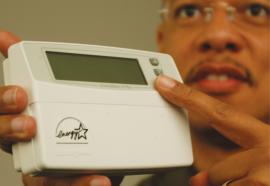
Imagine a setback thermostat programmed at the factory that the consumer couldn’t modify. Who would want this device? You could give the customer a big enough discount to get her to accept the device, but she would be happier and you could save about as much energy if the customer could decide on the temperature and time settings.

Efficiency products will proliferate, for better or worse.
Recently an acquaintance of mine, who shall remain nameless, gave a diamond engagement ring to his girlfriend. She joyfully accepted the ring. But soon her joy turned to disgust when she learned that her lovely “diamond” actually was a cubic zirconium. Last I heard, she’d broken off the engagement and was dating her ex-fiancé’s former boss.

New approaches account for the economic benefits of renewables.
Many green power customers benefit from long-term fixed prices. The most effective programs recognize the value of this price hedge—and fairly exempt customers from fuel cost adders in utility rates.

Consumers await a revolutionary interface.
Consumers await the revolutionary interface that will allow them to control their energy consumption. Besides maximizing efficiency in the home, these units will allow more
price and product competition. But disincentives to innovation are making for slow progress.

Web technologies are transforming the utility-customer relationship.
Thanks to the Internet, consumers expect 21st century companies to bring a sophisticated online presence. Utilities that leverage the interactive power of Web 2.0 will strengthen their positions in regulatory and competitive arenas.

Market forces are transforming the IOU business model.
As market forces transform the IOU business model, Apple’s iPhone provides a metaphor and possible example for the industry to follow. The iUtility will emerge as companies renegotiate the regulatory compact and reinterpret the traditional rate formula.
Two utilities win customer support for dynamic pricing and demand response.
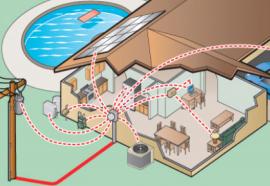
If the recent backlash against California’s proposed new building codes proves anything, it’s that ratepayers won’t buy into the smart-metering concept by themselves. The industry will have to sell it. How then should electric utilities, municipals and cooperatives go about introducing smart grid technologies? Two major utilities—Public Service Electric & Gas (PSE&G) and Southern California Edison—are in the early stages of doing just that
California learns painful lessons from its proposal to mandate demand response.
When the California Energy Commission (CEC) proposed to include programmable communicating thermostats in the state’s new building codes, it expected some push-back from home builders. It didn’t expect what it got: a major public outcry.