Customer Engagement

Strategic Segmentation

Understanding consumers’ likelihood of engaging in smart energy behaviors.

Different customers have different wants and needs, and customer segmentation strategies can help utilities understand those differences. But what’s the best way to define customer classes? And what strategies will be most successful in reaching those customers and serving them?

Maximizing Customer Benefits

Performance measurement and action steps for smart grid investments.

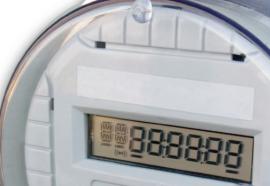
Regulators and customers are holding utilities’ feet to the fire, when it comes to investing in advanced metering and smart grid systems—and rightly so. Making the most of investments requires a systematic approach to establishing standards and monitoring performance. But it also requires policy frameworks and cost recovery regimes that provide the right incentives.

Opting Out

Providing reasonable options for customers who object to smart meters.

Customers in some markets are demanding the right to opt out of smart meter deployments. Their concerns involve radio frequency (RF) emissions and potential privacy breaches. Whether these concerns are valid or not, some regulators are requiring options for customers who don’t want smart meters. The right approach can satisfy concerns without undue costs and complexities.

Letters to the Editor

(December 2011) Responding to Contributing Editor John Bewick’s analysis of factors impeding the nuclear renaissance in the wake of the Fukushima disaster. Plus comments about construction work in progress provisions as a strategy for saving ratepayers' money.

Smart Coaching

Customers won’t join the team unless utilities make it worthwhile.

Are utilities ready to really engage customers, and get them to care about more than just whether the beer stays cold? Or will we turn our focus away from customers, because we don’t know how to engage them — or how to convert engagement into value?

Technology for the Masses

The consumer-centric smart grid and its challenge for regulators.

Federal and state regulators play a critical role in the evolution of the smart grid. Lawmakers face a host of questions, from deciding who owns consumer data and how it can be used, to defining a new range of regulated and unregulated utility services and applications. How much regulation will be needed to manage the transformation to a smart grid? And how much regulation will be too much?

Traffic Signal Ahead

Smart grid evolution requires two-way communication—with meters and with customers themselves.

Despite the industry’s cautious and inconsistent approach, the smart grid is becoming a reality. Projects and pilots have provided valuable experience about what works and what doesn’t. Recent survey results illustrate the lessons utilities have learned—and how they’re changing their strategies.

Crossing the Threshold

Technology opens customers’ homes to utility services.

Advanced metering infrastructure and intelligent appliances are opening the door to a new market for utility services. But in-home services are a completely different ball game. Going beyond the meter will require utilities to transform the way they engage and serve customers.

Letters to the Editor

(August 2011) Economic consultant Michael Rosenzweig challenges Constantine Gonatas’s proposal for ensuring FERC’s demand response rulemaking achieves its objectives. Also, Juliet Shavit takes issue with Contributing Editor Steven Andersen’s characterization of utility customers as “crazy.”

Top 10 EV Challenges

Utilities prepare for a bumpy road.

Electric vehicles promise major benefits for utilities, including increased electricity sales and accelerated transformation of passive energy consumers into collaborative stakeholders. But EV integration faces major challenges, from transformer overloading to the complexity of managing mobile transactions. Addressing these challenges in a collaborative way will allow the industry—and the country—to realize the benefits of a healthy market for electric transportation services.