Law & Lawyers

Technology Corridor

Cyber and Physical Security:

Technology Corridor

Cyber and Physical Security:

Although NERC and other agencies are helping out, utilities still face internal obstacles.

Winners and Losers: Utility Strategy and Shareholder Return

Diversified companies lead (and the globals lag) over the past five years.

The unbundling of services and companies in the electricity and natural gas industries have created unprecedented opportunities to reinvent the traditional integrated utility model, with a broader array of attendant risks and rewards. But this past year was clearly one of retrenchment and strategic soul searching, allowing an opportunity to re-examine the sector for winning business formulas.

The AGs' Global Warming Suits: Regulation by Litigation

A recent lawsuit filed by eight state attorneys general will take the industry to the place where bad policy meets with bad economics.

A recent lawsuit filed by eight state attorneys general alleges that various coal-fired generating plants are harming the states' residents because of the plants' carbon dioxide emissions. From an economic and regulatory standpoint, it's difficult to see how this lawsuit, or litigation in general, can be viewed as a prudent approach to environmental mitigation.

Power Measurements

Failing the Market-Power Test:

Power Measurement

Failing the Market-Power Test:

How FERC's ruling could affect wholesale power markets.

People

People for October 2004

Positions filled at Peabody Energy, Wisconsin Public Service, Wisconsin Energy Corp., and others.

Perspective: Don't Fence Me Out

Hard-and-fast ring-fencing rules are not the best way to maintain order in the partially deregulated utility sector.

In times of stress due to financial setbacks or pending merger issues, regulatory ring-fencing or internal company structural separation can serve a beneficial purpose. But beware! Predicting the future is an impossible task: Utility regulators should hesitate before putting policies in place today that limit managerial discretion in the future, based upon the belief that they possess that ability.

Comments on 'Solving the Crisis in Unscheduled Power'

Letters to the Editor

Robert Blohm's article, "Solving the Crisis in Unscheduled Power," ignores a significant part of the power-scheduling paradigm — that is, it ignores transmission. Every power schedule not only includes load and generation but also a path to move the electricity between those points.

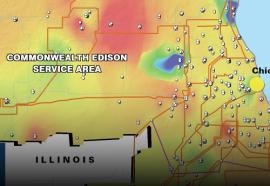
Power Measurements: Welcome to ComEd, Population 1,281

What did LMPs tell us this summer in PJM's new neighborhood?

With one summer under its belt as a member of PJM, ComEd has been called a complete success by some, boring by others. Using data from Energy Velocity's Market Ops and Weather products, we can see the impact of transmission and weather on ComEd this summer.

Debilitating Doctrine

How the filed-rate policy wreaks havoc — and what courts can do about it.

Like many venerable legal rules, the filed-rate doctrine is rarely questioned. Over the last century, it has served many important purposes. However, with deregulated wholesale electric power markets at the federal level and various degrees of deregulation across the states, both the doctrine's continued applicability and usefulness are suspect.

The New Money Pipelines

Business & Money: Merchant plants now draw investors from three different worlds — each with its own agenda.

It's tempting to chalk up the recent bubble in merchant generation to just another industry cycle, but there's more to consider. Investors have not made a wholesale exit from power finance. It is true that many have taken significant losses. It is also true that some remain wary. Despite all this, investors continue to enter the market and address the needs of the industry today.