

Infrastructure of Innovation
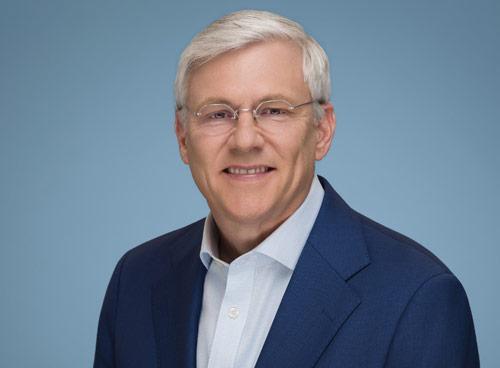
Drew Maloney is the President and CEO of the Edison Electric Institute (EEI), the association representing all U.S. investor-owned electric companies. A leading global government affairs expert with over 25 years of experience, he previously served as President and CEO of the American Investment Council and was unanimously confirmed by the U.S. Senate as the Assistant Secretary of the Treasury for Legislative Affairs.
His career also includes senior roles at Hess Corporation and serving as CEO of Ogilvy Government Relations. Maloney holds a bachelor’s degree from Randolph-Macon College and a J.D. from Catholic University’s Columbus School of Law.
Paul Kjellander is PUF Senior Advisor, former NARUC and Idaho Commission President.
As the country undergoes its most significant transformation in a century, the dialogue has shifted from maintaining the status quo to orchestrating a multi-year evolution. While the scope of this transition is national, it relies a lot on state-level innovation to get steel in the ground and new technologies on the grid.
Because this innovation is fundamentally a human-driven endeavor, the evolution of the workforce remains a year-round priority, which includes celebrating National Lineworker Appreciation Day in July.
PUF sat down with EEI President and CEO Drew Maloney to discuss the trillion-dollar investment cycle required for grid resilience, the deployment of advanced diagnostic tools, and why the modern workforce is the indispensable engine powering innovation in every state.
PUF’s Paul Kjellander: We are entering a period of unprecedented activity in the utility sector. With grid hardening, electrification, and new transmission, the sheer scale of work is daunting. How is EEI framing the current state of investment in the American grid?