Law & Lawyers

Life After Yucca

Reviving hope for spent-fuel storage.

With Yucca Mountain declared dead, America’s nuclear power industry needs new solutions for managing spent fuel. Although the task is complicated, examples of siting success provide hope that a collaborative approach can close the nuclear fuel cycle.

Transmission Preemption

Federal policy trumps state siting authority.

In some states, transmission projects have slowed to a halt as regulators attempt to substitute their own need determinations for those of RTOs. The federal framework encourages cooperation, but Congress and the courts have given FERC clear authority over interstate transmission systems.

The Case for Customer Centricity

Understanding consumer preferences in energy efficiency.

Utilities are just beginning to learn how to engage customers. Across business models and regulatory frameworks, realizing the full potential of smart metering requires a new core competence in consumer support.

DR Distortion

Are subsidies the best way to achieve smart grid goals?

FERC has proposed that wholesale energy markets should subsidize load reductions with full LMP (locational marginal price), without deducting the customers’ retail savings. Such a policy could distort the market, and other solutions might achieve the same objectives more efficiently.

Baked-In or Decoupled?

Rate case risk in a climate of declining sales.

(November 2010) Data from 2010 ROE Survey documents the industry’s struggle to reconcile rate trackers and decoupling provisions in utility rate cases.

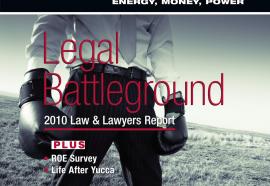
Legal Battleground

2010 Law & Lawyers Report

The U.S. utility industry has never faced a more uncertain legal and regulatory landscape. From FERC demand-response pricing to state ratemaking disputes, legal trends and decisions are reshaping the power and gas market. The industry’s top legal minds provide strategic counsel. By definition, a battlefield is an ugly place. Conflict creates chaos, uncertainty and danger.

What Happened in Maryland

State case has national implications for grid modernization.

Strict adherence to cost-of-service ratemaking led to what might be considered a Luddite decision in the Maryland PSC’s initial rejection of BGE’s smart-grid filing. More than 60 years ago, the U.S. Supreme Court ruled that ratemaking calls for “pragmatic adjustments” to regulatory policy, toward the goal of sensible and effective rate orders. Delaying modernization doesn’t serve the aims of customer choice, conservation or electric system efficiency.

Penalty Predictability Enhanced

FERC modifies its enforcement guidelines.

FERC’s revised policy provides greater predictability and transparency in the commission’s approach to determining civil and criminal penalties under its statutory authority. Despite a more systematic framework, however, FERC retains discretion to assess penalties based on the facts of individual cases.

Dynamic Pricing and Low-Income Customers

Correcting misconceptions about load-management programs.

Do low-income customers respond to dynamic rates? The answer is yes, and in fact such customers can benefit from dynamic pricing without shifting loads”contrary to conventional wisdom. A study co-authored by the Edison Foundation’s Institute for Electric Efficiency and the Brattle Group shows that restricting access to dynamic rates might actually be harmful to most low-income customers.

Nuclear Renaissance and the Global Supply Chain

Avoiding pitfalls, realizing benefits.

Unlike the first generation of domestically sourced plants, new reactors being built in America will draw from a global supply chain for a wide range of materials, equipment and services. This poses a more complex set of challenges, from obtaining talent and material to qualifying and validating product sources.