Law & Lawyers

Facing Compliance Risks

Enforcement trends call for a proactive approach to complying with market rules.

Federal regulators have penalized wholesale energy market participants with fines ranging from $300 thousand to $300 million over the past two years. The magnitude of the penalties, along with uncertainty over how to effectively mitigate the risk of any civil action by regulators, has raised concern about how companies are approaching their regulatory obligations.


Selling the Smart Grid

Special report on public support for smart metering and demand response.

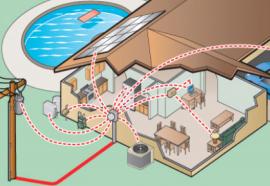
Smart metering is entering the public consciousness. But gaining support from consumers is tricky business, as evidenced by the recent backlash in California. Customers will accept dynamic pricing and demand-response capabilities only if regulators and utilities take a soft-sell approach.

Selling the Smart Grid - The Policy

Why many state regulators still have qualms about endorsing smart meters.

A year ago, in its formal investigation of state policy on smart meters, the Florida Public Service Commission conceded that while three of the state’s five major investor-owned electric utilities offered an optional time-of-use rate to residential customers, participation in fact remained “typically quite small,” averaging only about 1 percent.

Selling the Smart Grid - The Pitch

Two utilities win customer support for dynamic pricing and demand response.

If the recent backlash against California’s proposed new building codes proves anything, it’s that ratepayers won’t buy into the smart-metering concept by themselves. The industry will have to sell it. How then should electric utilities, municipals and cooperatives go about introducing smart grid technologies? Two major utilities—Public Service Electric & Gas (PSE&G) and Southern California Edison—are in the early stages of doing just that

Selling the Smart Grid - The Backlash

California learns painful lessons from its proposal to mandate demand response.

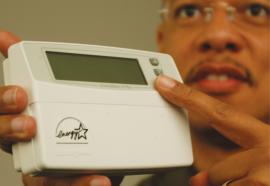
When the California Energy Commission (CEC) proposed to include programmable communicating thermostats in the state’s new building codes, it expected some push-back from home builders. It didn’t expect what it got: a major public outcry.

Seeing Green

Wind deals promise brisk business for years to come.

(May 2008) Senators were voting on legislation to extend the renewable production tax credit (PTC) as this issue of Fortnightly went to press. But with federal tax support for windpower in a perennial state of limbo, is the current rate of growth sustainable? To find out, Fortnightly spoke with Andrew Redinger, managing director and head of the utility and alternative energy group at KeyBanc Capital Markets.

Carbon Transparency

Public companies face rising pressure to disclose climate-change risks.

Regulation of greenhouse-gas (GHG) emissions and other efforts to control these growing environmental concerns increasingly are impacting businesses, and investors are seeking more and better information on climate-change risks to make informed investment decisions.

Letters to the Editor

In light of your prescient Frontlines column, “PURPA Redirected” (February 2008), I am curious of your insight. Is there a nexus between §571 of EISA and the demand response (DR) text in the pending FERC NOPR, RM07-19-000, “Wholesale Competition in Regions with Organized Electric Markets,” issued Feb. 22, 2008?

Green Heroes

Utilities can transform the world’s energy economy.

Perceval’s sagas are largely forgotten today, but at least one of them serves as a useful metaphor for an industry seeking the proverbial Holy Grail of clean-energy technology—specifically, the tale of Perceval and the Fisher King.

The High Cost of "Free" Capacity

Fickle behavior by LSEs threatens to destabilize organized markets.

Dodging capacity payments might become an art form among load-serving entities and large electric consumers, as evidenced by Duquesne’s plan to exit PJM, as well as alternative market-designs proposed by large users. But such behaviors might only serve to disrupt organized markets and cause a return to full regulation.