Law & Lawyers

Global Regulation: Exporting 'America' to the World

Why U.S. public utility commission-style ratemaking has becomes a hit overseas.

What are some approaches to regulation adopted in recent decades by national governments, and the implications for management making international investment decisions?

Watch the Cycle

Can the upward swing in global power infrastructure investment be sustained?

The current recovery in global power-sector investment is being driven not only by rising demand for power, but also by the huge levels of liquidity in global financial markets. How long will the current up-cycle last?

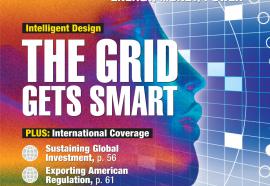
Smart Grid, Smart Utility

The intelligent-grid vision is becoming clearer as utilities take incremental steps toward a brighter future.

Building the intelligent grid will require less technical innovation than it does strategic innovation—a characteristic not typically ascribed to U.S. regulated utilities. But the utility culture is changing—by necessity, if not by choice.

Climate Panic Button

Ecology scientist Ken Caldeira sheds light on some radical ideas for fighting global warming.

Among climate scientists, Ken Caldeira is a self-described troublemaker. For instance, Caldeira annoyed tree-huggers and corporations alike by demonstrating that planting trees in most locations around the world actually exacerbates global warming. Fortnightly caught up with Caldeira recently to discuss his perspectives on geoengineering and its possible role in strategies to address climate change.

Duke's Risky Spin

Lackluster interest in Duke post spin-off bodes ill for the “pure play” electric utility.

It was the most anticipated energy deal in the New Year, but not for the usual reasons. The spin-off of Duke Energy’s natural-gas business into a stand-alone company, Spectra Energy Inc., peaked interest because the transaction was to have marked the vindication of the so-called “pure play” electric strategy. The deal also has captured attention because the spin-off represented a divestiture strategy that until now hasn’t been universally embraced, with gas assets still seen by some utilities as part of core operations.

Unintended Consequences

Does anyone care about rising redispatch costs?

Regional transmission organizations (RTOs) or independent system operators (ISOs) dominate the major power grids of North America, with the notable exceptions of the Southeast and Pacific Northwest. The purpose of this article is not to criticize system reliability but to highlight the more pervasive challenge today and for the future: Controlling the cost impact of decisions by grid operators on energy market participants.

Future Imperfect II: Managing Strategic Risk In the Age of Uncertainty

Part two of our series shows how utility companies can manage, but never eliminate, strategic risk.

The consequences of a flawed strategic choice unfold slowly, but they carry great weight. Consider IBM, which in 1980 chose to outsource to Intel the 16-bit processor needed for its entry into the personal computer market. The Intel chip, however, could not use the operating system that IBM had designed for its older 8-bit processors. And so the company had to outsource the operating system as well as the chip—to a startup company called Microsoft.