Law & Lawyers

Let's Be Rational About Hydrogen as a Vehicular Fuel

A response to “Forgetting Someone, Mr. Secretary?” Frontlines, Feb 1, 2002.

Mr. Stavros seems to fall into the same trap as so many of the major car manufacturers in assuming the need for a prohibitively costly infrastructure to supply this hydrogen when one already exists that offers by far the cheapest and environmentally vastly superior option—the natural gas transmission and distribution system.


Enron C&I Customers Paying Twice

Public Utilities Fortnightly and POWERdat®

Some large commercial and industrial customers who had signed energy contracts with the now-bankrupt Enron are forced to pay their utility bills a second time. "We're looking at these bills and saying, 'Hold on a minute,'" said one corporate energy manager.

Wag the Dog

Pack journalists feed off PG&E letter.

Was Pacific Gas and Electric’s recent customer mailing of a dog-bite letter and meter-reading schedule a selfless attempt to protect its employees from vicious canines? Or was the notice to dog owners a catty move to get the California press off the scent of Pacific Gas and Electric’s bankruptcy proceedings?

Breakdown of Tariff Risk

Explaining timing risks and magnitude risks.

Tariff risk is that risk which the marketer incurs downstream of the uplift. This risk can be broken into Timing Risk (I - III) and Magnitude Risk (IV-VI) as illustrated below.

Bid-Offer Spreads: A Hedging Device

How exactly does a retail energy marketer use the spread as a hedging device?

Bid-Offer spread represents the profit a market-maker or intermediary demands for creating liquidity. This spread is composed of the intermediary’s variable cost per deal plus any liquidity risk they may bear.

Crawling from the Wreckage

Can California’s energy market be salvaged?

The whole world watched the California energy market debacle. Now, economists talk about what it would take to rebuild California into a truly competitive power market.

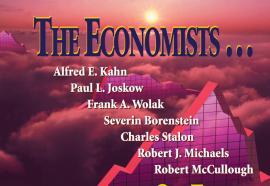
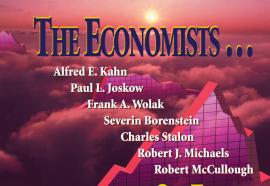
The Economists: On the Future of Energy Markets

Uncertainty clouds direction of FERC’s market engineering.

The failure of California markets, Enron, and the low-point of the merchant plant business cycle has left many executives pessimistic over the prospects that true competitive markets in energy will develop. Top economists discuss the industry’s outlook.

The Doomsday Scenario

Debt + secret triggers = another Enron.

Much the same way that bankers used to worry about a “run on the bank,” where there is an overwhelming demand for liquidity that causes a solvent bank to fail, so should energy companies be worried that their use of material adverse change (MAC) clauses might trigger an overwhelming demand for liquidity that causes a once solvent energy company to fail. Of course, the banks now have the Fed to protect the financial system from a liquidity crisis. No such luck for the energy industry.