

TS Conductor
Jason Huang is founder and CEO of TS Conductor, a U.S.-based leader in award-winning, high-performance conductors for global power grids. After earning his MS in materials science and engineering from UCLA and his MBA and PhD from The Ohio State University, Huang worked with U.S. government agencies – including NIST – on sensitive American defense aircraft, and held technical, senior roles at Owens Corning, BAE Systems, Solvay, and CTC Global, where he was CEO and CTO. Today, he is dedicated to driving the global energy expansion, upgrading power grids to increase capacity and efficiency and integrating new generation faster.
The U.S. power sector stands at a critical juncture, driven by unprecedented load growth from data centers, domestic manufacturing, and rapid electrification. According to the U.S. Department of Energy’s latest National Transmission Needs Study, the nation must expand transmission capacity by 60 percent by 2030 — and potentially triple it by 2050 — to keep pace.
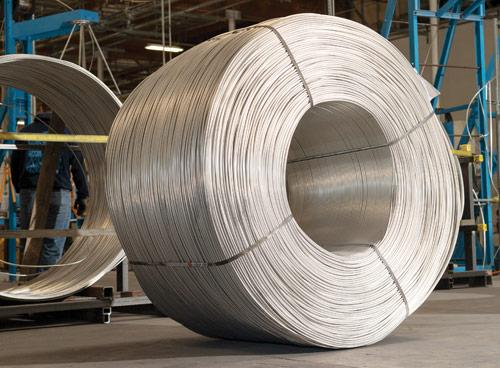
PUF Executive Editor Rachel Bryant discussed advanced reconductoring as a solution with TS Conductor CEO Jason Huang. While legacy conductors like ACSR and ACSS suffer from thermal sag that requires expensive structural retrofits and tall replacement towers, TS Conductor’s next-generation technology allows utilities to double or triple line capacity on existing structures within months.
Advanced conductors are shifting from temporary congestion fixes to foundational, 40-year capital assets. To de-risk supply chains and support national energy security, TS Conductor is expanding with dual-coast manufacturing facilities in California and South Carolina to deliver manageably short lead times for U.S. utilities.
PUF’s Rachel Bryant: Large loads like data centers have been increasingly bringing their own power and/or co-locating with new generation. So why the focus on transmission expansion? Is it as needed as people have been saying?