

State Energy Offices
Dominique Gómez is the Deputy Director of the Colorado Energy Office where she oversees the office’s 100 staff and $200M budget. She has previous experience in venture-backed startups, consulting, and government. Dominique sits on several boards and commissions including the Denver Water Board of Commissioners, Cascadia Consulting, and the Colorado Clean Energy Fund. Dominique has a BA from Yale University, an MBA from Stanford University, and an MPP from the Kennedy School of Government. She is an avid reader, a fast walker, and enjoys gluten in all forms. Dominique lives in Denver with her partner and two young daughters.
Kristofor Anderson is the Director of Energy Resources with the Georgia Environmental Finance Authority (GEFA), which is the state’s energy office. Kristofor leads a division that manages hundreds of millions of dollars of grants and loans, including the State Energy Program, the Weatherization Assistance Program, the Fuel Storage Tank Program, and the Natural Gas Infrastructure Loan Program, as well as multiple other programs funding energy resiliency and efficiency. Kristofor joined GEFA as a program manager in 2010 and prior to that was a planning consultant and worked on a range of planning and management programs for federal and energy industry clients. Kristofor serves on the boards of the National Association of State Energy Officials and the Southeast Energy Efficiency Alliance. Kristofor has a Master of City and Regional Planning degree from Georgia Tech and a Bachelor of Science in geography from the University of Wisconsin Madison.
Emily Wilbur currently serves as Director of the Missouri Department of Natural Resources’ Division of Energy. She brings to this role a strategic vision to advance efficient use of diverse energy resources and to achieve greater energy security for future generations of Missourians. Emily started her career with the Missouri Department of Natural Resources in 2001 as an air construction permit writer before turning her focus to air quality planning issues in 2013, overseeing rulemaking actions and State Implementation Plan revisions. Emily holds a bachelor’s and master’s degree in chemical engineering from the University of Missouri-Columbia and is a licensed Professional Engineer in Missouri.
While NASEO’s David Terry provided the essential, national macro perspective in this article, a lot of the real work of energy policy happens in our state capitals and local communities. To see how these broad trends play out in everyday life, PUF invited three directors from very different regions to share their insights.
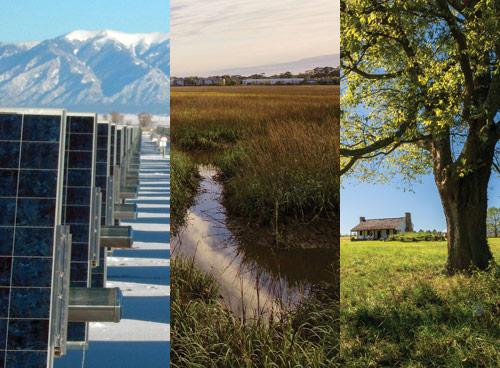
Despite the differences in their geography and regional priorities, they all share a singular focus on serving the public in a tangible way. In this roundtable, we dove into the unique regional realities that define their work. We discussed how they manage everything from wildfire resilience to wood waste diversion to data center growth.
These State Energy Office (SEO) leaders explained how they navigate the balance between long-term strategy and immediate needs like affordability and provided a candid look at the people behind the policy.
PUF’s Rachel Bryant: Energy is a technical and often invisible field, yet you have each dedicated your careers to the public sector side of this industry. When did you realize this was your path, and what eventually led you to work for an SEO?