

Iberian Peninsula Blackout
Hala Ballouz is Founder and Chief Vision Officer at Electric Power Engineers.
Jeff Ressler is CEO at Clean Power Research.
Jared Leader is Sr. Director of Resilience & Globe, Research & Industry Strategy at Smart Electric Power Alliance.
Last April, over fifty-five million people lost power across Portugal, Spain, and parts of France. The outage lasted up to ten hours, caused multiple fatalities, and triggered an international scramble to understand what went wrong. The early theories of cyberattack and insufficient renewable output proved incomplete.
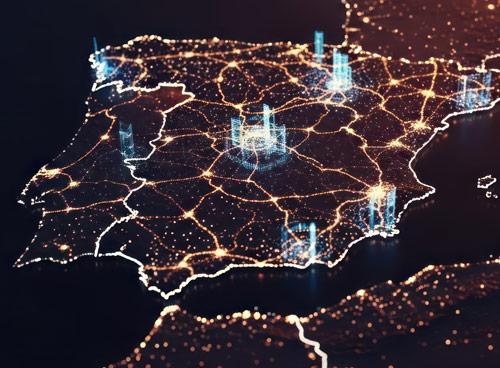
The official analysis from ENTSO-E — the transmission association responsible for secure and coordinated operation of Europe’s electricity grid — pointed to a fundamental misalignment between how the grid was physically behaving and the frameworks still being used to manage it.
Portugal has transformed its electricity system drastically over the past two decades. In response to EU climate commitments and falling technology costs, renewables grew from 30 percent of electricity demand in 2000 to 85 percent by 2024. But as the fuel mix changed, so did the physics.
Traditional synchronous generators provided mechanical inertia to act as a natural shock absorber that resisted sudden frequency swings and bought operators time to respond to disturbances. They also provide other benefits for the system, such as dynamic voltage control and damping capacity.