

Overview of State Actions
Rusty Haynes is Senior Manager of Research & Industry Strategy at Smart Electric Power Alliance (SEPA).
Autumn Proudlove is Managing Director of Policy & Markets at North Carolina Clean Energy Technology Center (NCCETC).
With U.S. electricity demand projected to rise by 25% by 2030 and by 78% by 2050, accommodating load growth and ensuring resource adequacy are top priorities for policymakers, regulators, and electric utilities across the United States. The scale and rapid evolution of this immense challenge are prompting states and utilities — and some prospective large-load customers — to consider all options, including newer approaches and creative solutions that support grid flexibility.
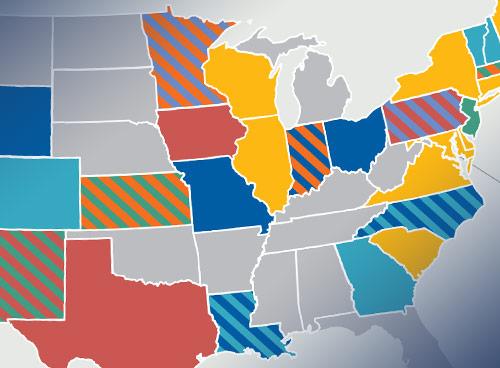
Increasingly, states and utilities are exploring — and in many cases, prioritizing — virtual power plants (VPPs) as a punctual, versatile solution to meet this challenge. Fueled by fleets of distributed energy resources (DERs), VPPs can boost grid flexibility and resilience, while expanding customer choice.
They can also be highly cost-effective. A 2023 Brattle study found that the net cost to a utility of providing resource adequacy from a VPP is only 40% to 60% of the cost of the alternative options, while 60 gigawatts (GW) of deployed VPPs could meet future U.S. resource adequacy needs at $15 billion to $35 billion less than the cost of the alternative options over 10 years. (These projections exclude more than $20 billion in additional societal benefits, such as added resilience and avoided emissions, which would accrue over the same decade.)