

Women's History Month
Tracey LeBeau serves as Administrator and CEO of the Western Area Power Administration, leading one of the nation’s largest power marketers and transmission operators. With more than 20 years in energy infrastructure and finance, she guides WAPA’s mission to deliver reliable, cost-based hydropower across a 15-state region. WAPA provides wholesale power and transmission services to nearly 700 customers, supporting electric service for more than 40 million Americans. An experienced infrastructure executive, LeBeau is focused on strengthening grid reliability, modernizing transmission systems, and ensuring WAPA continues to deliver safe, dependable power to the communities it serves.
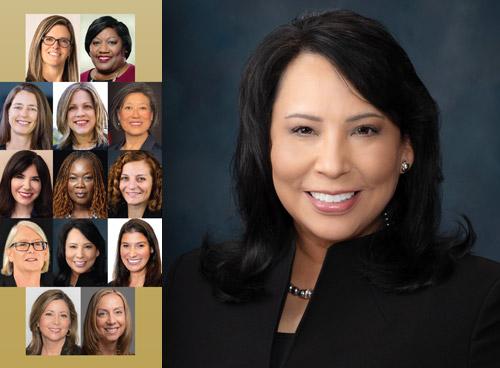
In recognition of Women’s History Month, PUF sat down with thirteen women leaders across the energy sector to capture their perspectives at a pivotal moment for our industry.
Demand is rising. Infrastructure investment is accelerating. Utilities, regulators, and innovators are navigating increasing expectations around affordability, reliability, and resilience. In this environment, leadership is not theoretical. It is operational. Decisions made today will shape markets, systems, and communities for decades.
The women featured here represent the breadth of the modern grid. Their roles span utilities, regulatory commissions, federal public power, trade associations, research institutions, consumer advocacy offices, and technology companies. The perspectives are varied, but several themes recur: translating complexity into clarity, balancing competing priorities, preparing the workforce of the future, and keeping customers at the center of the conversation.
These conversations are not a single narrative. They are a collection of viewpoints reflecting the realities of leadership in motion. Together, they offer insight into how this essential industry is being guided forward at a time of significant change.
PUF’s Rachel Bryant: Your career in energy has spanned many parts of the industry. How did you find your way into this work?
Tracey LeBeau: Like many people in this industry, my path was not linear. I entered the energy sector early in my career and quickly found myself drawn to its complexity. Curiosity has always been my defining trait, and energy is an industry where there is always more to understand.
An early defining professional experience was working on an oil and gas tax case which piqued my curiosity on the business of energy. In the following years, I moved into exploration and production, the gas pipeline business, and eventually generation development.
The throughline of those roles was a desire to understand the full value chain, from wellhead to burner tip. I wanted to see how energy moves through the system, how decisions in one part of the value chain affect outcomes elsewhere, and how all of it ultimately impacts people.
Although I have a legal background and initially thought I might focus more narrowly on regulation, I became increasingly interested in the business of energy itself. Markets, infrastructure, and finance are deeply interconnected in this industry, and understanding how those pieces work together became far more compelling to me than staying in a single silo.
Over time, I came to see that energy is not just a technical or economic system. It is a human system. The stakes are real, and the consequences of decisions are felt in communities. That realization shaped the direction of my career and continues to guide how I approach this work today.
PUF: How has your view of leadership evolved over time?
Tracey LeBeau: My leadership philosophy has evolved over the years, but one principle has remained constant: Energy work must ultimately serve communities. That is my true north.
I come from a deeply impoverished community, so I understand firsthand what reliable infrastructure can mean. This is not abstract or theoretical for me.
Infrastructure determines whether communities can succeed. It affects health, education, economic opportunity, and overall quality of life. That perspective informs how I lead and how I make decisions.
Earlier in my career, I believed leadership meant having the answers. Over time, I learned that leadership is really about asking the right questions. It is about cutting through complexity, understanding what truly matters, and keeping people focused on shared goals.
That clarity did not come all at once. It developed through experience, reflection, and, frankly, mistakes. Today, when situations feel overwhelming or overly complicated, I return to a grounding question: How does this help communities? That lens keeps me focused and helps guide decision making in uncertain environments.
PUF: What is the mission of the Western Area Power Administration and how do you see it evolving?
Tracey LeBeau: WAPA’s core mission is enduring. We deliver federal hydropower to a diverse set of customers, including hundreds of municipal utilities, electric cooperatives, tribal governments, military installations, and irrigation districts. We deliver power over the 17,000 miles of transmission that we own and operate. This mission is rooted in affordability, reliability, and public service.

At the same time, the context in which we operate has changed dramatically. Extreme weather, energy markets, and system demands look very different today than they did even a decade ago.
When I stepped into this role in 2021, one of the most urgent challenges we faced was the drought affecting the Colorado River system. It quickly became clear that this was not a short-term disruption, but a slow-moving natural disaster with long-term implications for hydropower availability.
One of the most important steps we took early on was engaging our customers directly and honestly. Despite representing very different interests, our customers came together, in partnership with us, to have difficult but necessary conversations. I asked a question that had not always been posed explicitly: If hydropower becomes unavailable, what do you want us to do?
It was a sobering discussion, but one our customers appreciated. We did not pretend to have all the answers. Instead, we acknowledged that any path forward would need to be developed collaboratively. Even in those moments when our mission gets tested, our partnership with our customers is our bedrock, now more than ever.
PUF: How has that collaboration shaped your approach moving forward?
Tracey LeBeau: It reinforces the importance of unity and shared responsibility. Utilities understand mutual aid. We support one another during emergencies, and that same mindset applies to the various challenges that face us.
WAPA owns and operates one of the top ten largest transmission utilities in the United States. As hydropower availability changes, our system operations become even more critical. The question now is how we optimize what we have to meet customer needs while staying true to our mission.
That may require using the grid differently than it was designed over fifty years ago. While drought and other system impacting forces are concerning, it is also an opportunity to think about how the system can adapt. At the same time, we don’t get to experiment at the expense of public safety, affordability, or system resilience. Progress must be steady, disciplined, and grounded in operational excellence.
In many ways, this evolution was inevitable. Our grid always must respond to new conditions, technologies, and demands. So it is imperative that we collaborate more than ever, given how connected we are across the western grid.
PUF: How do you support your team through ongoing uncertainty?
Tracey LeBeau: Energy right now is very much a team sport. Between drought, market shifts, and workforce transitions, pressure is constant, and the pace of change can be demanding for everyone involved.
What has helped is the deep commitment to public service among the people who work here. Keeping the team focused on mission has not been as difficult as one might expect because that commitment runs deep.
Our customers have also been incredibly supportive, reaching out regularly to ask how they can help and how they can be part of the solution. That sense of shared purpose matters and resonates deeply with our team.
When people feel supported and aligned, they find ways to carry one another through difficult periods. My role is to create space for honesty, clarity, and trust, even when the answers are not simple and the path forward is still taking shape.
PUF: Looking back, is there advice that has stayed with you throughout your career?
Tracey LeBeau: There is one piece of advice I heard early on that has always stayed with me: You would be surprised how little people think of you.
It sounds almost flippant, but it is incredibly freeing. If you worry about every decision, every statement, or every misstep, you can paralyze yourself. That perspective gives you permission to move forward, learn, and adjust as needed, without carrying unnecessary weight.
I have also learned the importance of humility. Grace is an overused word, but people are generally understanding when you acknowledge mistakes and are authentic. In my experience, most people are willing to move forward when you approach things with honesty and respect.
PUF: Amidst all of these changes, how are you feeling about the energy industry as a whole right now?
Tracey LeBeau: I think about the industry as deeply interconnected. In my experience, we only succeed if we succeed collectively.
At WAPA, reliability and affordability are always central to decision making. But safety is the foundation which enables those priorities. Putting people first, to make sure they return safely home is the core of our core values, whether you are a lineman or a marketer or an administrative professional.
There are a lot of cool things emerging in the energy industry. Our work with the Department of Energy is exciting, and to be part of an organization like DOE that is advancing innovation in areas like AI, computational power, and other emerging technologies.
But at the end of the day, the system still depends on poles, wires, transformers, and skilled people to build, operate, and maintain it.
We do not talk enough about workforce. We cannot expand the transmission system we need without people. But none of it will succeed unless we invest in the workforce required to make it happen. Our work may be technical, but the mission is human.
If I have a core takeaway, it’s that if this is not the beginning of a transmission renaissance, I am not sure what is. It is an exciting time to be in this industry and we have a lot of work to do to gear up to build systems that make sense for the rest of this century.
Women’s History Month articles at fortnightly.com
- Doseke Akporiaye, WRISE Executive Director
- Hannah Bascom, Uplight Chief Growth and Commercial Officer
- Michele Beck, Utah Office of Consumer Services Director
- Vittoria Bellissimo, CanREA President and CEO
- Judy Chang, FERC Commissioner
- Neva Espinoza, EPRI Senior Vice President, Energy Supply, and Chief Generation Officer
- Sonia Kastner, Pano AI Co-Founder and CEO
- Maria Korsnick, Nuclear Energy Institute CEO
- Tracey LeBeau, WAPA Administrator and CEO
- Michele O'Connell, Orange and Rockland Utilities CEO
- Ann Rendahl, NARUC President
- Melissa Washington, ComEd Senior Vice President
- Alice Yake, Breakthrough Energy Vice President, GRIDS
