

Women's History Month
As Chief Growth and Commercial Officer at Uplight, Hannah Bascom leads efforts to catalyze innovation in the energy industry and further Uplight’s growth, focusing on enabling decarbonization at scale. With over 15 years of experience, Hannah has held key roles in market development and product marketing, including leadership positions at Nest, Google, SPAN, and Pacific Gas and Electric Company. Her work has consistently centered on creating impactful collaborations with utilities, governments, and industry stakeholders. Hannah holds an MBA from The University of Chicago Booth School of Business and a BA with honors in Urban Studies from Brown University.
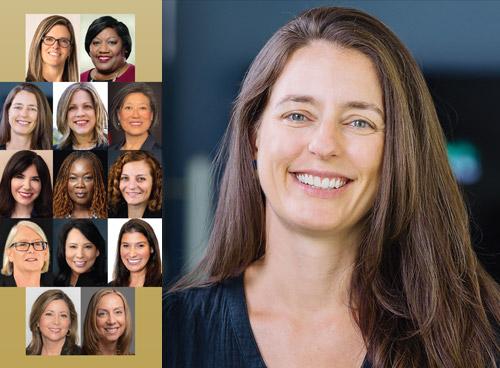
In recognition of Women’s History Month, PUF sat down with thirteen women leaders across the energy sector to capture their perspectives at a pivotal moment for our industry.
Demand is rising. Infrastructure investment is accelerating. Utilities, regulators, and innovators are navigating increasing expectations around affordability, reliability, and resilience. In this environment, leadership is not theoretical. It is operational. Decisions made today will shape markets, systems, and communities for decades.
The women featured here represent the breadth of the modern grid. Their roles span utilities, regulatory commissions, federal public power, trade associations, research institutions, consumer advocacy offices, and technology companies. The perspectives are varied, but several themes recur: translating complexity into clarity, balancing competing priorities, preparing the workforce of the future, and keeping customers at the center of the conversation.
These conversations are not a single narrative. They are a collection of viewpoints reflecting the realities of leadership in motion. Together, they offer insight into how this essential industry is being guided forward at a time of significant change.
PUF’s Rachel Bryant: People love a neat career arc, but energy is rarely that kind of story. When you look back, what were the key steps that pulled you toward this work?
Hannah Bascom: My path has definitely not been linear. I have always been impact- and mission-oriented, and I started my career at an education nonprofit.
My first role there was a quasi-chief of staff position to one of the organization’s founders. It was an incredible first job because I was exposed to so many different types of work.
Early in a career, you learn quickly what energizes you and where you want to grow, and that role gave me valuable clarity about both. One observation that stuck with me was how much influence corporate partners had.
They had vendor relationships, well-paid employees, and political clout. At the same time, my boss was teaching in an MBA program, and I began to see that if I wanted to create impact at scale, I needed to understand how large organizations work from the inside.
That realization led me to pursue an MBA. I was fortunate and intentional about landing at PG&E through its internship program, which set my career on its current trajectory. It gave me a way to align my values with an industry that touches everyone’s lives and continues to evolve rapidly.
PUF: Was there a specific moment or experience that sparked your interest in the energy sector?
Hannah Bascom: During my first semester of graduate school, I took a class on the future of the energy industry, and it was a turning point for me. I was exposed to emerging technologies and saw how quickly the industry was beginning to change.
Climate change was becoming a more prominent part of the conversation, and energy felt like a space where I could build a career while also contributing to meaningful solutions. That class made it clear that energy was not just technically interesting, but deeply consequential. It felt like the right place to focus my efforts.
PUF: What is something about the energy transition that people tend to underestimate or misunderstand?
Hannah Bascom: I keep coming back to the idea that change is going to happen more quickly than people expect. If you look at historical forecasts for technologies like solar, batteries, and other clean energy resources, they have consistently underestimated adoption by orders of magnitude.
Cost curves and adoption curves tell a clear story, and we are now at a point where the next fifteen years are likely to look very different from the fifteen years behind us.
We often assume change will be incremental, but the pace is accelerating. That has major implications for planning, investment, and how quickly utilities and regulators need to adapt.
PUF: You have spent much of your career navigating uncertainty and change. How has that shaped your approach to leadership?

Hannah Bascom: Earlier in my career, I believed that leaders were somehow superhuman, that they had all the answers and a level of certainty the rest of us just did not. Over time, I have learned that the strongest leaders operate very differently.
Strong leadership is about bringing together smart people, drawing out what they know, facilitating honest conversations, and then having the courage to make a decision, even when the path forward is not perfectly clear. It also requires the determination to follow through and make that direction successful.
I have come to believe that if you want to lead people through periods of intense change, you have to build trust long before the crisis arrives. That means fostering transparency, encouraging healthy disagreement, and creating a culture where people feel safe expressing different perspectives.
At the same time, decision making matters. Teams can get stuck in analysis paralysis or wait too long for consensus. I believe in disagreement and commitment. We can debate and challenge one another, but once a decision is made, we align behind it.
PUF: Were there mentors or early influences that helped shape that leadership philosophy?
Hannah Bascom: My first boss at the education nonprofit, Ned Rhymer, had a huge influence on me. He truly embodied the idea that feedback is a gift. I remember being terrified during my first performance review, but that experience taught me the value of vulnerability and self-awareness.
Those moments, where you have no choice but to confront your growth areas, make you stronger and more effective as a leader. They also make you a better human.
I was also deeply shaped by my time at PG&E. That group of people continues to be incredibly influential in my career. It was a proving ground for understanding the energy industry and for learning how to drive change from within large, complex organizations.
PUF: From your vantage point today, what challenges feel most urgent for the energy industry?
Hannah Bascom: Across North America and globally, grids are facing sustained demand growth, tighter capacity margins, rising costs, and more extreme weather. Utilities do not have the luxury of time or the ability to rely on the status quo.
At Uplight, our role is to help utilities invest in the flexible capacity they already have. Demand-side resources are often underutilized, yet they represent one of the fastest and most cost-effective tools available to improve reliability and manage costs.
By leveraging those resources at scale, utilities can reduce upward pressure on rates while making the grid more flexible and resilient.
PUF: Affordability remains top of mind. How do you see Uplight’s work fitting into that challenge?
Hannah Bascom: Affordability is central. It takes a long time and a lot of capital to build new generation and transmission infrastructure. Those investments are necessary, but they are not quick or cheap.
If utilities can better leverage the assets already in customers’ homes and businesses, they can make meaningful progress more quickly and affordably. That also empowers customers to take control of their energy use and bills, which is something people are increasingly asking for.
We also believe it is critical to bring regulators along in this conversation. Concepts like grid utilization and load flexibility are gaining bipartisan support because they focus on maximizing the value of existing infrastructure. Using the infrastructure we already have more effectively is something nearly everyone can agree on.
PUF: As part of a Women’s History focus, what has your experience been as a woman in energy leadership?
Hannah Bascom: I am incredibly grateful for the network of women who have helped shape my career, and I try to pay that forward whenever I can. The strongest teams I have been part of were stronger because they included a diversity of perspectives. Different lived experiences lead to better questions, better debate, and ultimately better decisions.
At the same time, we still do not have enough intentional conversations about how to bring more women into leadership roles, particularly in areas like sales and commercial leadership. Progress does not happen by accident. It requires people to be thoughtful about who is in the room and who is not.
I have come to believe that how you get a seat at the table matters far less than how you show up once you are there. What builds credibility is the work you do, the perspective you bring, and the value you add. Diverse representation strengthens organizations, but performance and contribution are what sustain your place.
For me, the responsibility is twofold: earn your place through work and make it easier for those coming behind you to do the same. Over time, being the only woman in the room should feel less notable. When it still does, it is simply a reminder that we all have more work to do.
PUF: Looking ahead, what gives you optimism about the energy transition?
Hannah Bascom: Energy is an essential service. We do not have the luxury of polarization. That reality forces collaboration in a way few other industries experience.
Better using the grid, empowering customers, and embracing flexibility are ideas that resonate across political and ideological lines. When we focus on shared outcomes like affordability, reliability, and resilience, progress becomes possible.
That is what motivates me. The work is complex, but it is deeply meaningful, and it touches everyone’s lives.
Women’s History Month articles at fortnightly.com
- Doseke Akporiaye, WRISE Executive Director
- Hannah Bascom, Uplight Chief Growth and Commercial Officer
- Michele Beck, Utah Office of Consumer Services Director
- Vittoria Bellissimo, CanREA President and CEO
- Judy Chang, FERC Commissioner
- Neva Espinoza, EPRI Senior Vice President, Energy Supply, and Chief Generation Officer
- Sonia Kastner, Pano AI Co-Founder and CEO
- Maria Korsnick, Nuclear Energy Institute CEO
- Tracey LeBeau, WAPA Administrator and CEO
- Michele O'Connell, Orange and Rockland Utilities CEO
- Ann Rendahl, NARUC President
- Melissa Washington, ComEd Senior Vice President
- Alice Yake, Breakthrough Energy Vice President, GRIDS
