The Feds

When Labor's Locked Out

ConEd, public safety, and the regulatory response.

Last summer’s union lockout at Consolidated Edison raised novel legal and regulatory questions that remain unresolved. Organized labor can strike, and management can respond, but do state utility commissions have authority to end a lockout that threatens service?

Federal Feud

The jurisdictional battle rages on, with FERC and EPA squaring off against the states.

When Revolutionary War veteran Daniel Shays led an attack on the federal Springfield Armory in January 1787—the spark that ignited the federalist movement—he scarcely could’ve guessed that now, 225 years later, his spiritual descendants would still be fighting that very same battle.

Dividend Double-Take

What happens when the Bush tax cuts expire?

Congress again is embroiled in another hyper-partisan food fight that threatens to blow up into a fiscal crisis. And once again dividend-paying companies like utilities are caught in the crossfire.

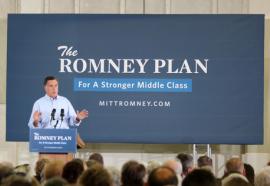
Mitt Romney and You

Bold plan for independence, or more partisan overreach?

The Republican nominee’s energy plan doesn’t say much about electricity or natural gas. But what it does say should sound familiar to anyone who’s followed energy policy for more than four years.

PURPA Wars

Why Idaho is fed up with renewables.

Idaho Power has more wind power than it can use—so much that it’s costing its ratepayers a bundle. It wants out, so it won’t have to buy from all the small wind farms that claim “QF” status under the 1978 PURPA law.

It's the Money, Not the Fish

Bonneville Power, wind curtailments and the bigger picture.

Asset owners in the Northwest cry foul as the Bonneville Power Administration struggles to reconcile FERC orders with its operational realities. The battle between wind and water has blown up into a regional conflict over transmission tariffs.

Regulating Fine Particles

Developing a new paradigm for managing fine particulate air pollution.

The Environmental Protection Agency regulates emissions of particulate matter based on the mass of those emissions—not on the toxicity of the particular components. A growing body of evidence shows that different kinds of particulates affect health differently. Research by the Electric Power Research Institute suggests that in order to most effectively protect public health, the EPA’s next round of air quality standards should differentiate between relatively benign sulfate or nitrate compounds, and more harmful trace metals in particulate emissions.

Solar Pink Slip

Election politics portend painful cutbacks.

Whether it deserves it or not, the solar energy industry can’t count on continued government largess, thanks in part to the Solyndra mess. But in the end, Solyndra’s demise might be exactly what the industry needs to wean itself off heavy subsidies and become a mainstream resource.

Battle Lines:

2011 Groundbreaking Law & Lawyers Survey and Report

With a flurry of major new environmental regulations, the Environmental Protection Agency (EPA) is altering the power generation landscape. But will the new federal rules survive court challenges—to say nothing of next year’s national elections? Fortnightly's Michael T. Burr considers the controversy over new environmental standards. PLUS: Top Utility Lawyers of 2011.

Frontiers of Efficiency

What conservation potential assessments tell us about ‘achievable’ efficiency.

Regulators across the country are relying on conservation-potential assessments to guide their policy decisions. Models based on macroeconomic analysis, end-use forecasting and accounting measurements provide different ways to assess the achievability of conservation and efficiency goals.